
Set market cap
101 cards tracked dailyThe genesis set of the entire Pokémon TCG — the cardboard that launched the hobby and still crowns every serious collection.
What to target in Base
The top 10 cards are 71% of the set’s $22,590.00 estimated singles cost — plan these first and the rest follows on a normal budget.
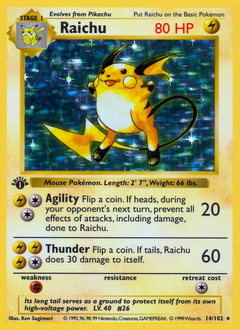
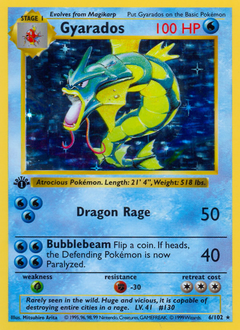
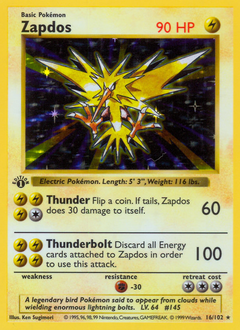
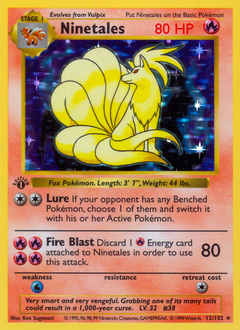
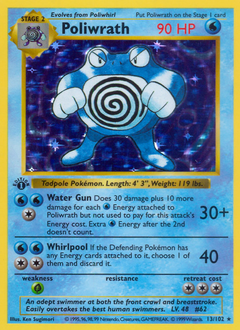
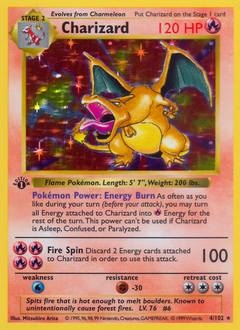
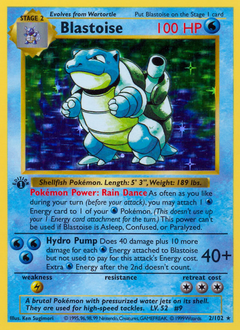
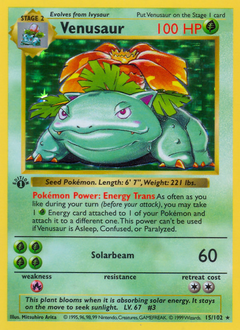
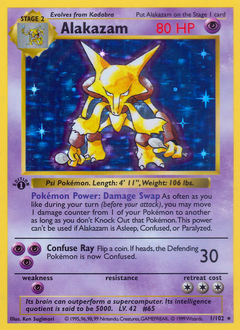
Value in Base Set is extraordinarily top-heavy. Charizard alone drives the market, with Blastoise and Venusaur forming the rest of the starter trinity that every collector chases first. Beyond the big three, the holo tier — Ninetales, Gyarados, Zapdos — carries genuine collector affection because these are the cards kids actually wanted to pull, not just the ones that cost the most. Poliwrath, Raichu, and Alakazam round out the holo class as slightly more attainable trophies that still look stunning in the old sheen.
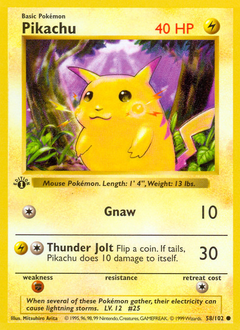
The one card worth calling out specifically is the Pikachu — a common that punches far above its rarity slot on pure mascot power. It's the exception that proves how much this set trades on iconography over scarcity. When the chase cards absorb the overwhelming majority of a completed set's cost, the takeaway is simple: in Base, you are buying holos, and everything else is rounding. Collectors love the holo rares for what they represent; the price tags on Charizard and Blastoise are a separate conversation from the joy of the cardboard itself.
| # | Card | Number | Rarity | Market | PSA 10 |
|---|---|---|---|---|---|
| 1 | Charizard | #4 | Rare Holo | $10,000.00 | $30,100.00 |
| 2 | Blastoise | #2 | Rare Holo | $1,300.00 | $7,793.76 |
| 3 | Venusaur | #15 | Rare Holo | $1,015.75 | $3,510.25 |
| 4 | Ninetales | #12 | Rare Holo | $800.00 | $1,959.28 |
| 5 | Gyarados | #6 | Rare Holo | $600.00 | $2,320.76 |
| 6 | Zapdos | #16 | Rare Holo | $600.00 | $1,890.00 |
| 7 | Poliwrath | #13 | Rare Holo | $499.00 | $1,080.50 |
| 8 | Raichu | #14 | Rare Holo | $467.50 | $3,260.95 |
| 9 | Pikachu | #58 | Common | $429.98 | $522.00 |
| 10 | Alakazam | #1 | Rare Holo | $429.00 | $2,580.67 |
How Base is built
Rarity breakdown
Price distribution
Most cards are bulk — the set’s value concentrates in a few chase cards.
Why Base matters
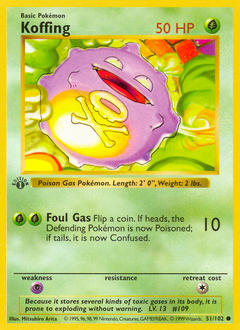
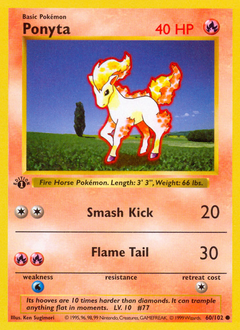
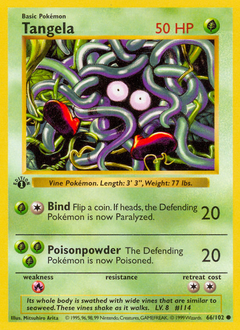
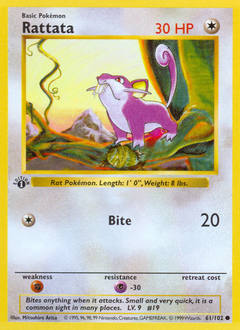
Base Set is where it all begins. Released in English in 1999 by Wizards of the Coast, it introduced North American players to the game that had already swept Japan, and its 102 cards form the foundational vocabulary of the entire hobby. The three starter finals — Charizard, Blastoise, Venusaur — anchor a roster of Kanto favorites rendered in the early Ken Sugimori and Mitsuhiro Arita art style that has since become shorthand for the whole vintage era. There is no set with more cultural weight in Pokémon collecting.
The set's reputation rests almost entirely on one card. Base Set Charizard is the most iconic Pokémon card ever printed, and its shadow falls across everything around it — but the holo rare roster runs deep, with Blastoise, Venusaur, Ninetales, Gyarados, and Zapdos all commanding real respect. Arita's Charizard illustration in particular became the face of a generation, and the "shadowless" versus "unlimited" print distinctions turned Base into a study in printing minutiae that collectors obsess over to this day. Early first-edition and shadowless copies are their own separate universe of value.
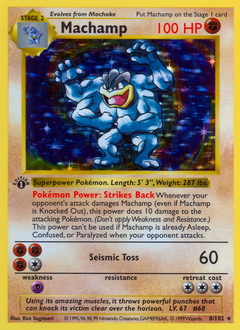
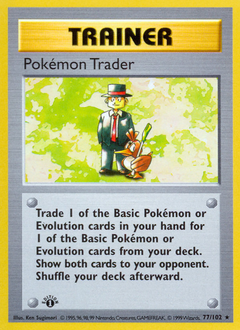
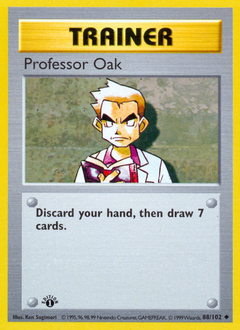
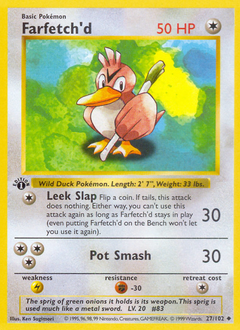
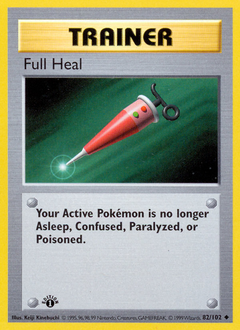
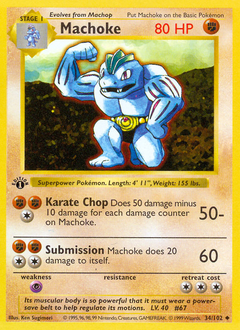
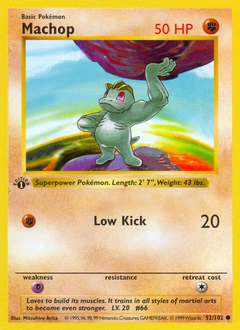
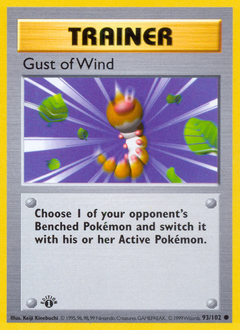
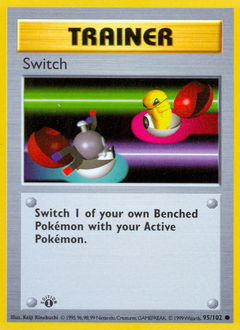
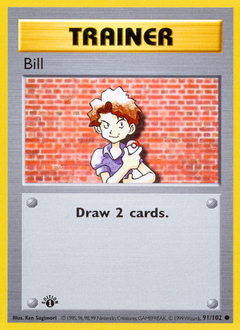
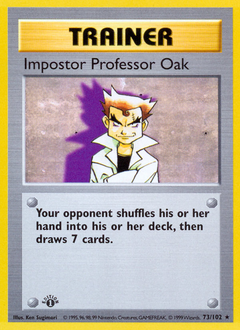
Among collectors, Base Set is treated less like a set to complete and more like a monument to own a piece of. The 16 holo rares are the trophies; the commons and uncommons — the Machops, the Grass Energies, the Bill and Professor Oak trainers — are the connective tissue that longtime players remember fumbling through as kids. It's a set that rewards nostalgia and punishes budgets, which is exactly why finishing one carries the weight it does.
The smart way to complete Base
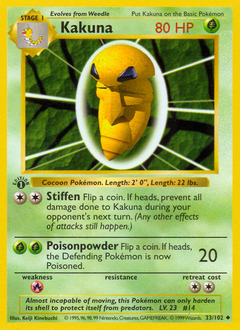
The smart approach to Base Set is to separate the two projects hiding inside it: the easy 86 non-holo cards, and the brutal 16 holo rares. The commons, uncommons, and trainers can be assembled cheaply and quickly — often in a single bulk lot. The holos are where the real time, money, and patience go, and they should be picked off one at a time as budget allows, saving the starter trinity for last.
- Secure a bulk lot of the commons, uncommons, and trainers to knock out the bulk of the 86 non-holo cards in one move
- Fill the remaining non-holo gaps as singles, watching condition on the energy cards and trainers that get overlooked
- Pick up the attainable holo rares first — Poliwrath, Raichu, Alakazam — to build momentum on the holo tier
- Move to the mid-tier holos: Ninetales, Gyarados, Zapdos, plus the iconic Pikachu common
- Tackle the starter trinity last — Venusaur, then Blastoise, then Charizard — as the capstone purchases
- Decide upfront whether you're chasing unlimited only, or venturing into shadowless/first-edition territory, which is a wholly separate and far more expensive build
Collecting challenges
Base Set is rated Extreme for good reason. The non-holo half is trivial, but the holo rares — and Charizard above all — represent a mountain of cost that never eases. Condition is the other trap: this is 25-plus-year-old cardboard, and Base holos are notorious for edge whitening, print lines, and surface scratching on the foil. Finding clean, well-centered copies is genuinely hard, and centering issues plague the entire holo run. The gap between a raw playable copy and a collector-grade one is enormous.
Singles or sealed?
For Base Set, singles are the only rational path to completion. Sealed Base product has crossed into pure collectible-artifact territory — vintage booster boxes are museum pieces priced accordingly, and ripping one for set-building would be an act of financial vandalism. The math on packs never favors the builder here; you buy the cards you need directly, and you buy sealed only if owning an unopened relic is the goal itself. The page shows the live comparison, but the qualitative answer rarely changes for a set this old.
Sealed product comparison
A vintage booster box is a trophy artifact, not a set-building tool; treat it as a standalone collectible if you can even source a legitimate one.
TCGplayer →eBay →The only sensible route to a completed set — pick off the holos individually and grab a bulk lot for the commons and trainers.
Card list ↓eBay lots →Base pull-rate estimates
Community-estimated era averages from large pack-opening aggregates — not official Pokémon data. “Specific card” is the expected packs for ONE particular card of that rarity.
| Rarity | Cards in set | Any pull | Specific card |
|---|---|---|---|
| Rare Holo | 15 | 1 in 3 | 1 in 45 |
Which Base cards are worth grading?
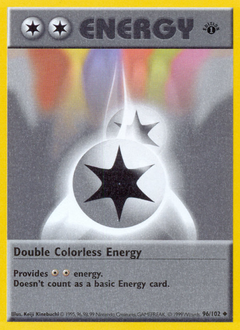
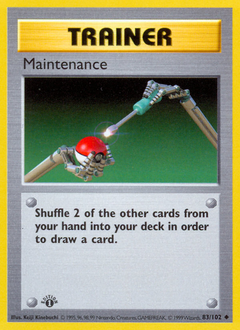
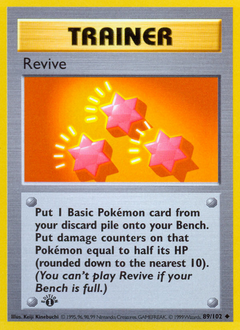
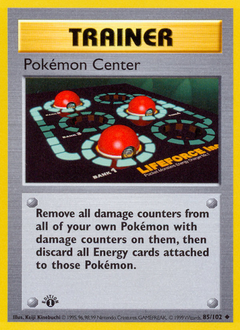
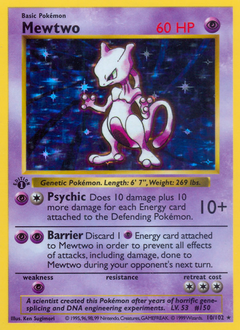
Grading Base Set is a high-stakes game concentrated at the top. The holo rares — Charizard, Blastoise, Venusaur and the rest — are where grading fees are trivial against the value of a clean high grade, and the market for slabbed Base holos is deep and liquid. The catch is condition: Base holos are so prone to centering and surface flaws that the gap between grades is a chasm, and submitting a marginal copy is money lost. Grade the holos when the card is genuinely clean, and be ruthless about pre-screening.\n\nMore surprising is where grading pays on the non-holo side. Mewtwo among the rares, and a handful of trainers and energy — Maintenance, Pokémon Center, Revive, Double Colorless Energy — can return positive value in top grades because pristine raw copies are scarcer than the low prices suggest, and demand from registry-set builders is real. These are the sleeper submissions: cheap to acquire, cheap to grade, and quietly worth it when they come back clean. The page's live EV figures show exactly where the line sits.
Positive expected value after ~$25 fees at live PSA prices and this set's real gem rates.
Mewtwo #10raw $266.40 → PSA 10 $3,583.90 13.5×EV +$166.19
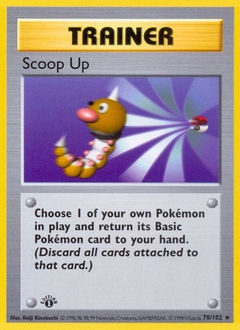
Scoop Up #78raw $69.49 → PSA 10 $199.99 2.9×EV +$35.53
Double Colorless Energy #96raw $45.19 → PSA 10 $688.12 15.2×EV +$86.18
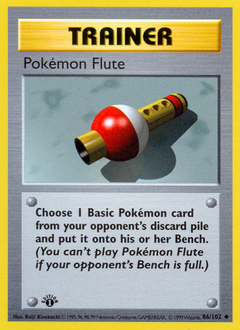
Pokémon Flute #86raw $29.66 → PSA 10 $399.96 13.5×EV +$78.04
Revive #89raw $28.16 → PSA 10 $534.60 19×EV +$103.01
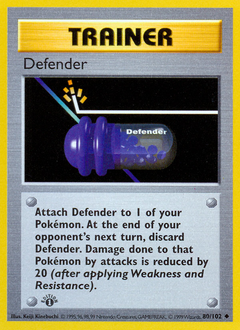
Defender #80raw $19.98 → PSA 10 $331.45 16.6×EV +$42.99Strong PSA 10 premium — the math works only on gem-worthy copies.
Charizard #4raw $10,000.00 → PSA 10 $30,100.00 3×EV −$6,533.06
Blastoise #2raw $1,300.00 → PSA 10 $7,793.76 6×EV −$390.02
Venusaur #15raw $1,015.75 → PSA 10 $3,510.25 3.5×EV −$345.86
Gyarados #6raw $600.00 → PSA 10 $2,320.76 3.9×EV −$332.02
Zapdos #16raw $600.00 → PSA 10 $1,890.00 3.2×EV −$392.61
Raichu #14raw $467.50 → PSA 10 $3,260.95 7×EV −$92.41Fees eat most of the margin. Grade to preserve a pristine pull, not for profit.
Ninetales #12raw $800.00 → PSA 10 $1,959.28 2.4×EV −$612.37
Poliwrath #13raw $499.00 → PSA 10 $1,080.50 2.2×EV −$350.70
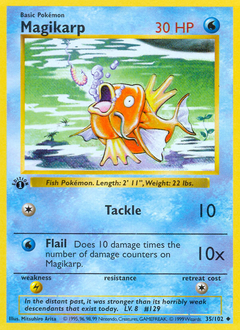
Magikarp #35raw $181.72 → PSA 10 $357.28 2×EV −$111.21
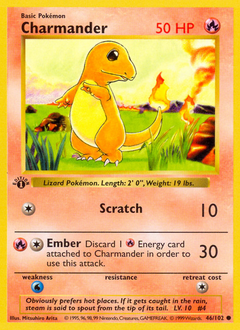
Charmander #46raw $141.18 → PSA 10 $320.49 2.3×EV −$78.85
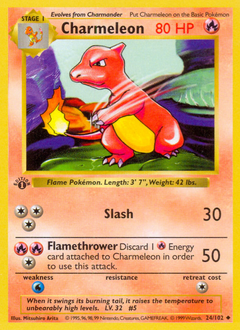
Charmeleon #24raw $131.86 → PSA 10 $250.00 1.9×EV −$86.68
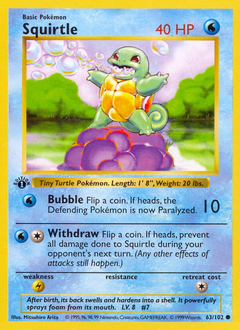
Squirtle #63raw $126.89 → PSA 10 $378.76 3×EV −$40.34Premiums and EV use tonight’s PSA prices and this set’s real gem rates — not projections.
Protect your Base cards
This set has 28 cards worth $100+ — sleeve-and-toploader territory at minimum, and the chase cards deserve double-sleeving.
Every card worth more than bulk goes in a sleeve before anything else touches it.
Shop on eBay →Dragon Shield Matte sleevesPremium sleeveThe archival-safe standard for cards you handle — double-sleeve chase cards with a perfect-fit inner.
Shop on eBay →Rigid toploaders (25ct)Rigid protectionSleeve + toploader is the minimum for anything you might grade or sell raw.
Shop on eBay →Side-loading binder (360)Set storageSide-loaders keep cards from sliding out; zip closure keeps dust and drops away.
Shop on eBay →Affiliate links — purchases support CardPrice at no extra cost. Full guide: how to build & store a master set.
Where Base goes from here
Base Set occupies a unique position: it is the origin point of the hobby, and that status is not reprintable. Wizards of the Coast product from 1999 has a fixed, ever-shrinking supply of clean copies, and while later Celebrations reprints and evolutions-style homages exist, none carry the original's authenticity. That permanence is what underpins long-term demand — Charizard in particular functions as the blue-chip anchor of the entire market, and interest in it tends to lead broader vintage cycles rather than follow them.\n\nThe honest caveat is that the top cards are already priced as the trophies they are; the easy appreciation of the early boom is behind us, and this is a market that moves on the strength of nostalgia and the health of the wider hobby. The non-holo half carries little investment story beyond graded gems. But if any Pokémon set is a permanent fixture that will still be coveted decades out, it's this one. Collect the holos because you want to own the origin — the enduring demand is a bonus, not a promise.
Not financial advice — live prices and trends are above, collect what you love.
Base — frequently asked questions
What's the difference between Base Set, Shadowless, and First Edition?
They're print variations of the same 102-card set. First Edition cards carry a stamp and were the earliest run; Shadowless copies lack the drop shadow to the right of the artwork box and came next; Unlimited is the common later printing with the shadow. Value climbs steeply from Unlimited to Shadowless to First Edition, especially on Charizard.
How many holo rares are in Base Set?
There are 16 holographic rare cards, including the famous starter trinity of Charizard, Blastoise, and Venusaur. These holos represent the overwhelming majority of a completed set's value and are the primary focus for most collectors.
Why is Base Set Charizard so valuable?
It's the most iconic card in the hobby — the face of the original English release, illustrated by Mitsuhiro Arita, and the card every kid in 1999 wanted. That cultural weight, combined with the difficulty of finding clean, well-centered copies of 25-plus-year-old cardboard, sustains its status as the market's blue-chip anchor.
Is Base Set hard to complete?
The non-holo 86 cards are easy and cheap to assemble, but the 16 holo rares make full completion an Extreme undertaking. The starter trinity alone represents a major expense, and finding collector-grade copies of any Base holo is genuinely challenging due to widespread centering and surface issues.
Which Base Set cards are worth grading?
The holo rares justify grading fees easily when the copy is clean, particularly Charizard, Blastoise, and Venusaur. Beyond those, sleeper submissions like Mewtwo and certain trainers and energy can return positive value in high grades because pristine raw copies are scarcer than their low prices suggest.
Was Base Set printed by Wizards of the Coast?
Yes. The 1999 English Base Set was produced by Wizards of the Coast, who held the Pokémon TCG license before The Pokémon Company took it over. That Wizards-era origin is part of what gives the set its foundational, un-reprintable status.
Sealed products
![Pokemon Base Set (Shadowless) [Unlimited Edition] Booster Box](https://api.cardprice.com/images/products/107597.jpg?v=3)
![Base Set Booster Box [Revised Unlimited Edition]](https://api.cardprice.com/images/products/185731.jpg?v=3)
![Pokemon Base Set (Shadowless) [1st Edition] Booster Pack](https://api.cardprice.com/images/products/138132.jpg?v=3)

![Pokemon Base Set (Shadowless) [Unlimited Edition] Booster Pack](https://api.cardprice.com/images/products/138131.jpg?v=3)
![Base Set Booster Pack [Revised Unlimited Edition]](https://api.cardprice.com/images/products/138130.jpg?v=3)


All cards 102


Most valuable cards in Base
- Charizard #4 — $800.43
- Blastoise #2 — $224.86
- Venusaur #15 — $168.68
- Mewtwo #10 — $77.73
- Raichu #14 — $72.19
- Alakazam #1 — $71.88
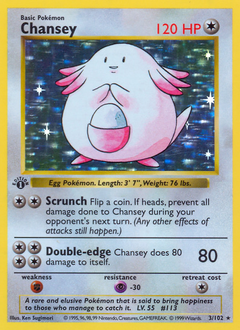
- Chansey #3 — $65.45
- Zapdos #16 — $55.80
- Gyarados #6 — $49.98
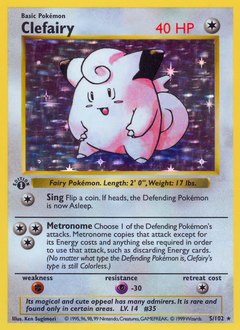
- Clefairy #5 — $42.48
About Base
Base is a Pokémon TCG expansion in the Base series, released on 1999-01-09. The set contains 102 cards. The combined market value of a complete set is currently $2,105.40, with Charizard #4 as the most valuable card at $800.43. Prices update nightly from live market data.